Salt Lakes Environmental centre is a civic building integrating architecture and landscape through the notion of a continuous walk towards and from the lakes. It is embedded within Larnaca’s coastline and the wider Natura 2000 significant biotopes network in Cyprus.
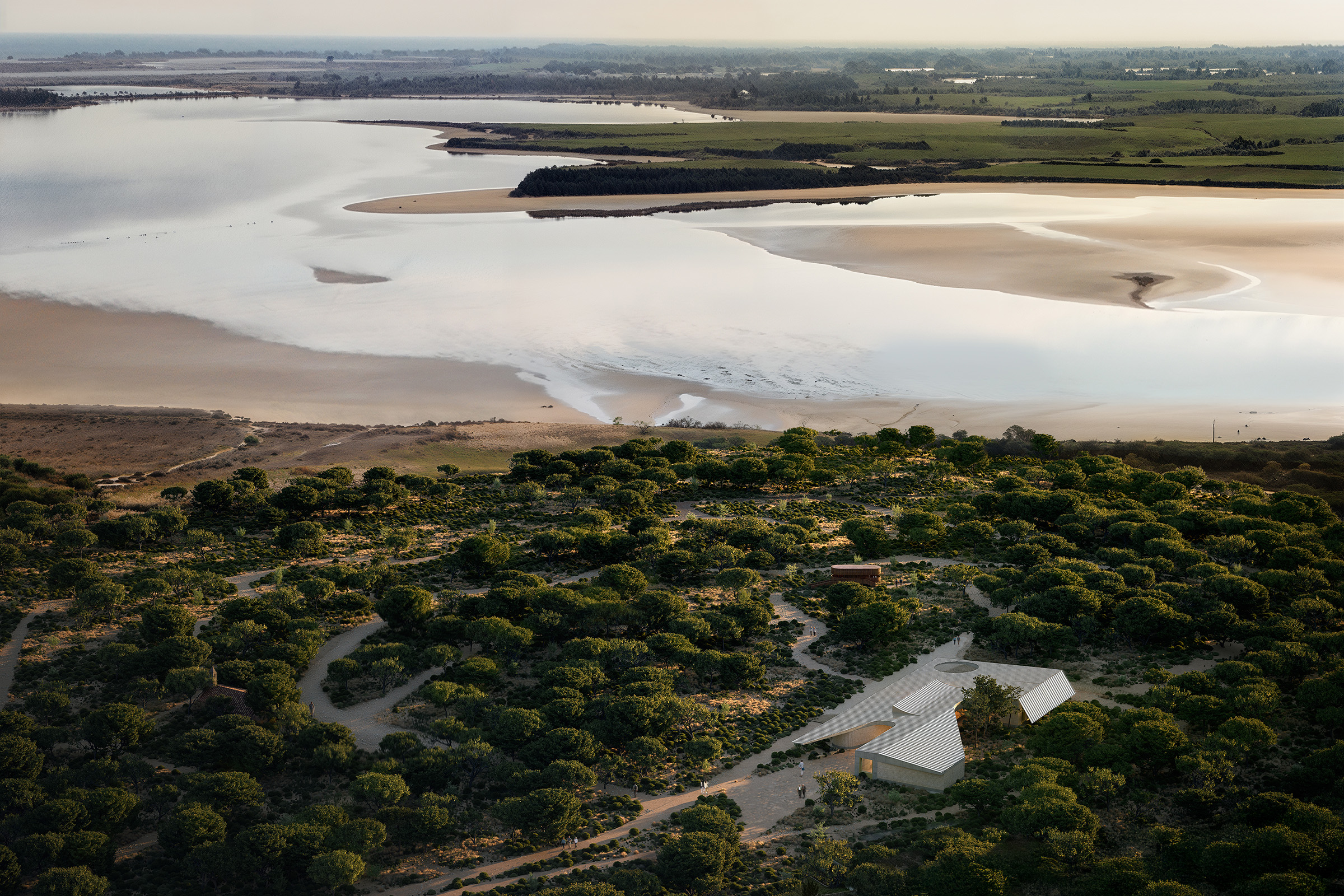
The design of walks through the landscape and building create a feeling of gradual discovery. These slow and relaxed meanders are articulated through thresholds, moments of pause, and framed visual connections to nature.
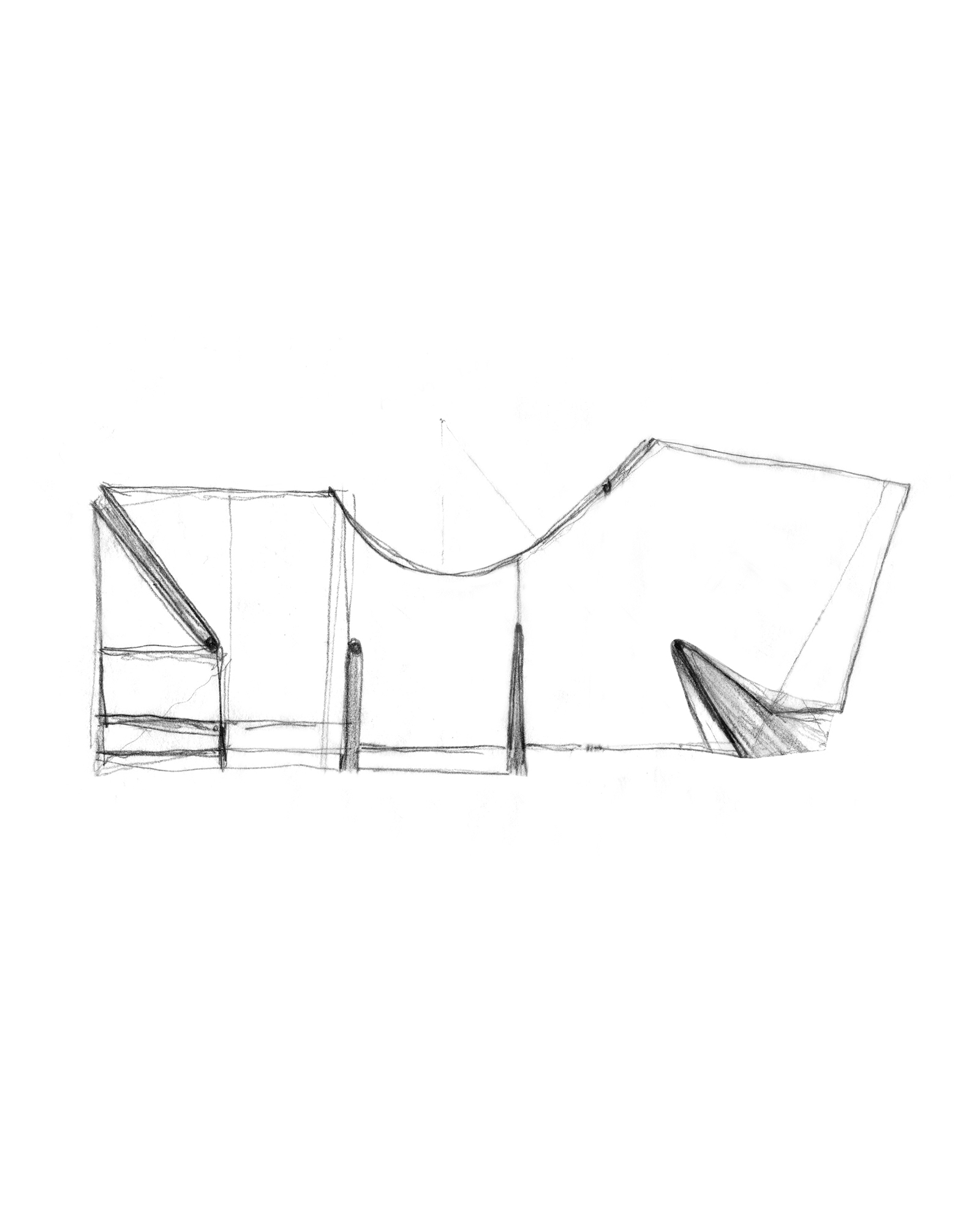
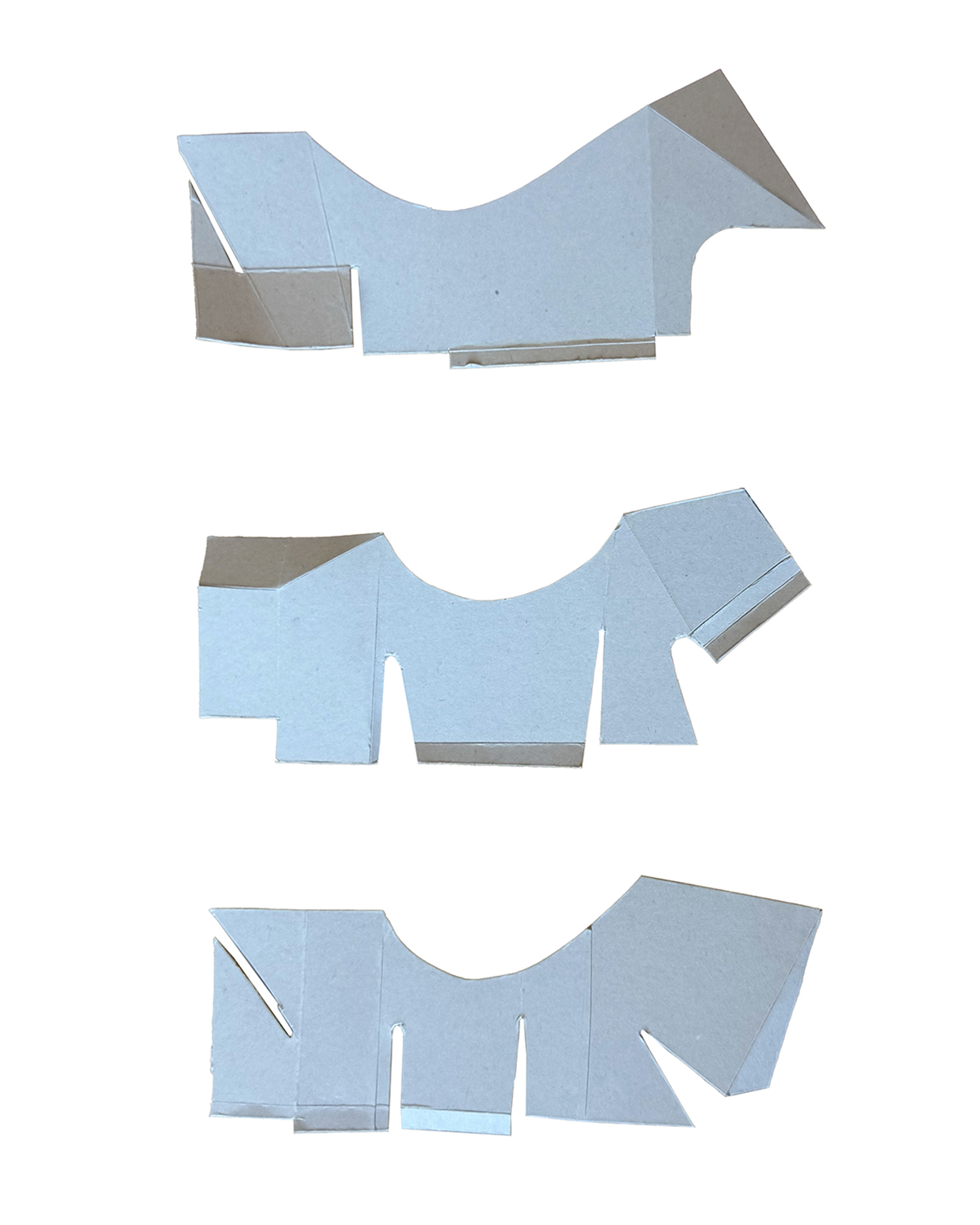
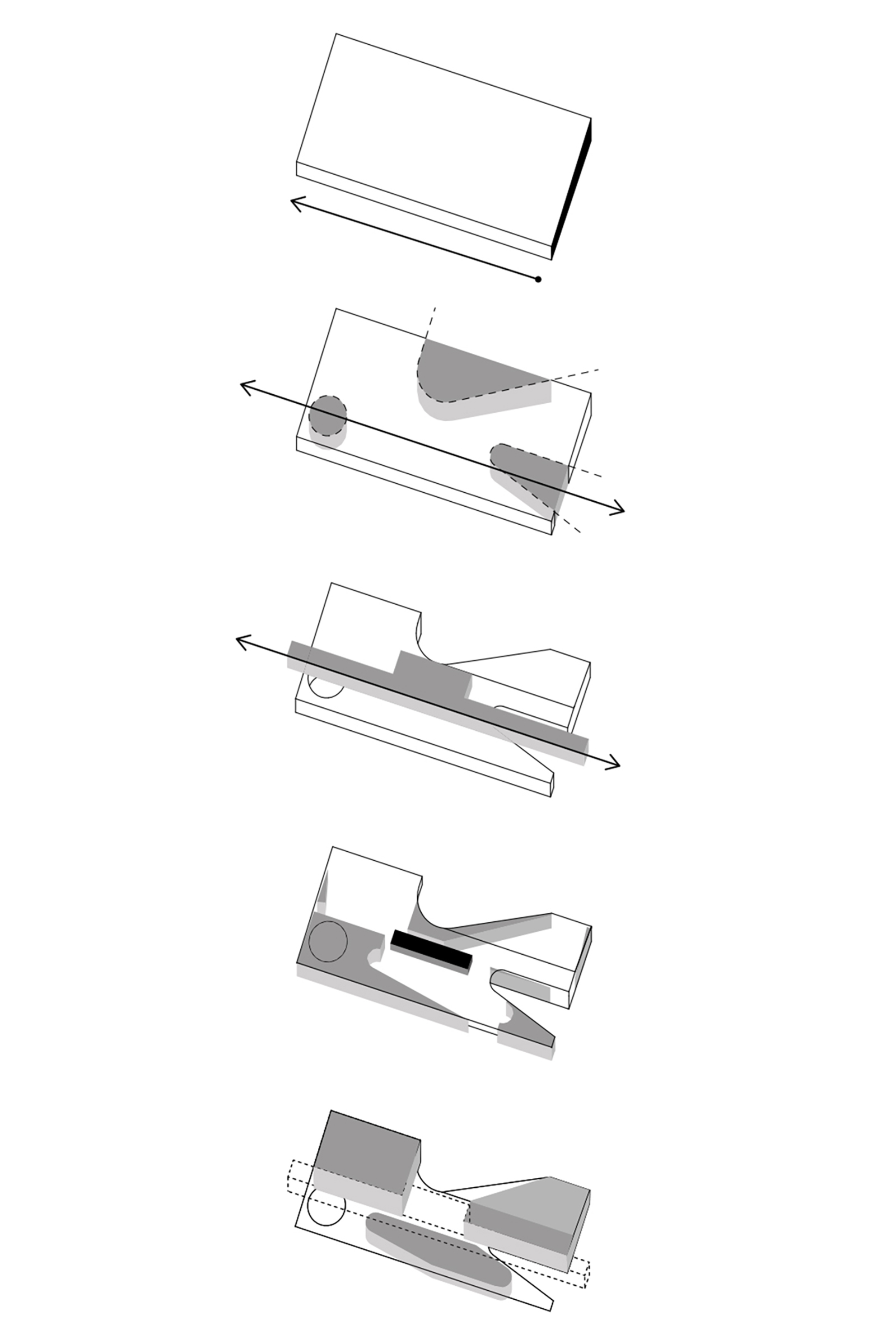
The building massing is formed from a simple sweep of a pitched roof profile – 5 to 3m, further articulated through a series of subtractions and incisions. These introduce daylight, guide views, define entrances and thresholds, and create covered outdoor spaces, while simultaneously organising the circulation.
A central axis is carved through the volume to connect all the programmes to a central welcome room, thereby establishing the visual continuity of the walk.
Three distinct sub-volumes organise the programme into educational, research and administrative services alongside the café.
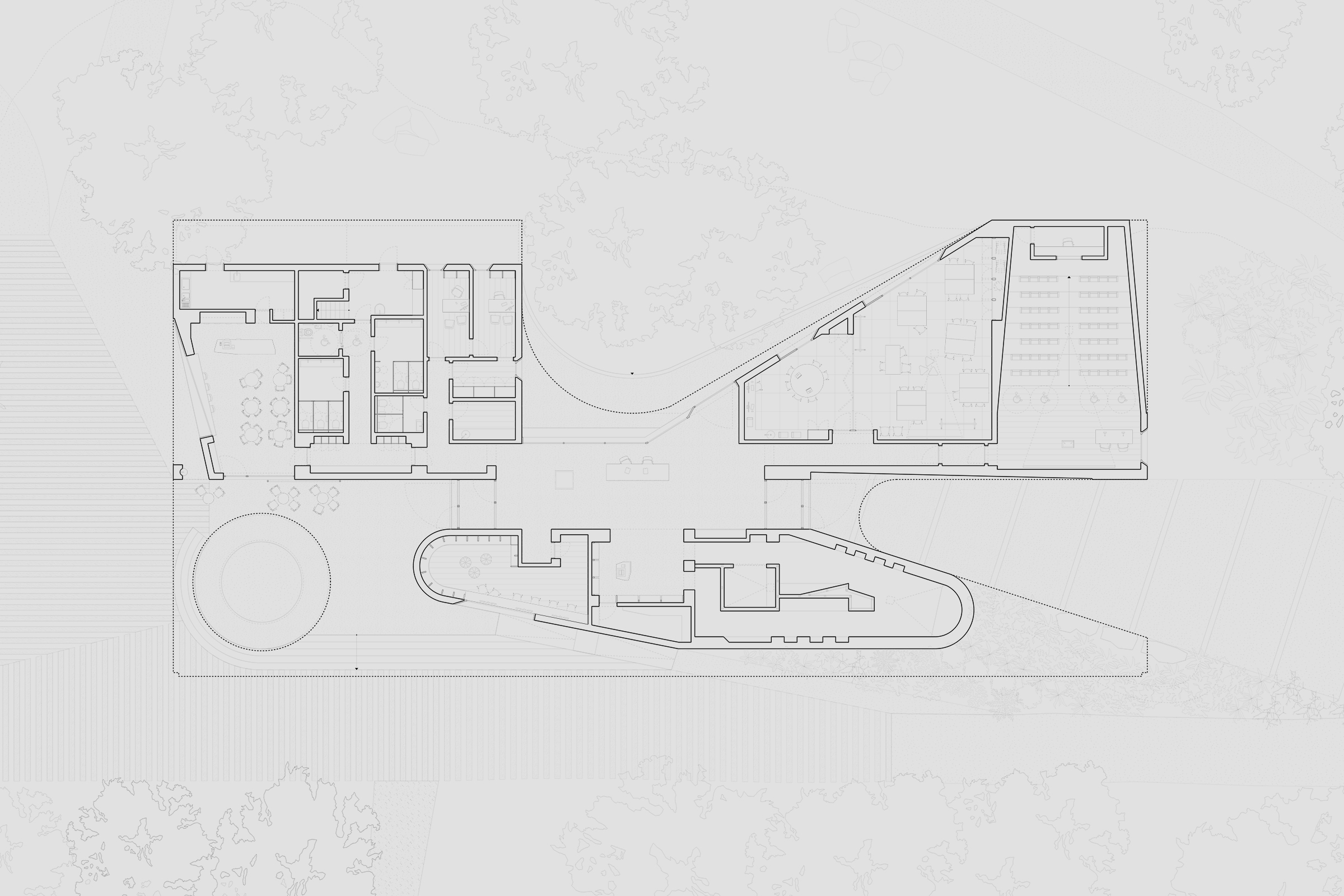
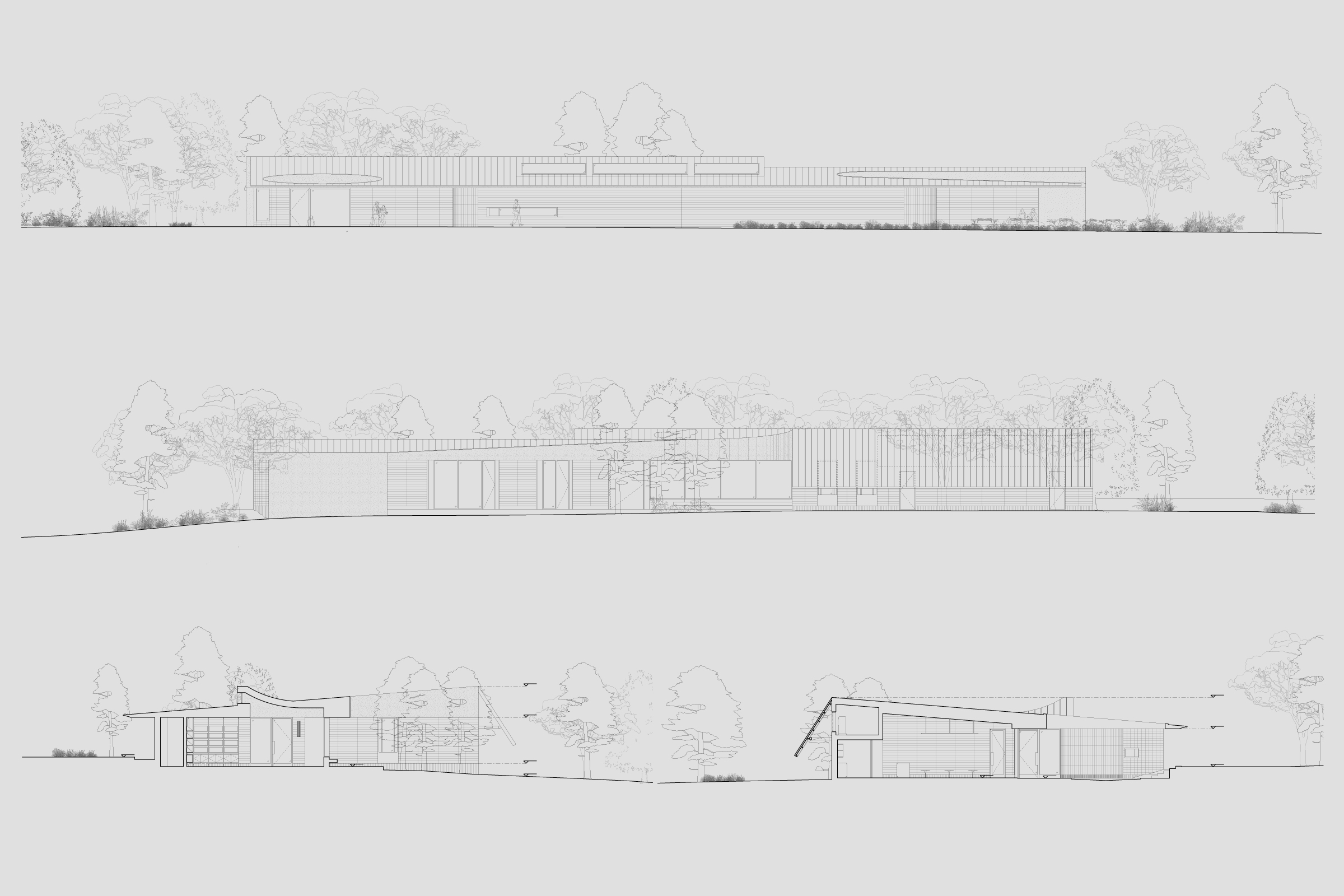
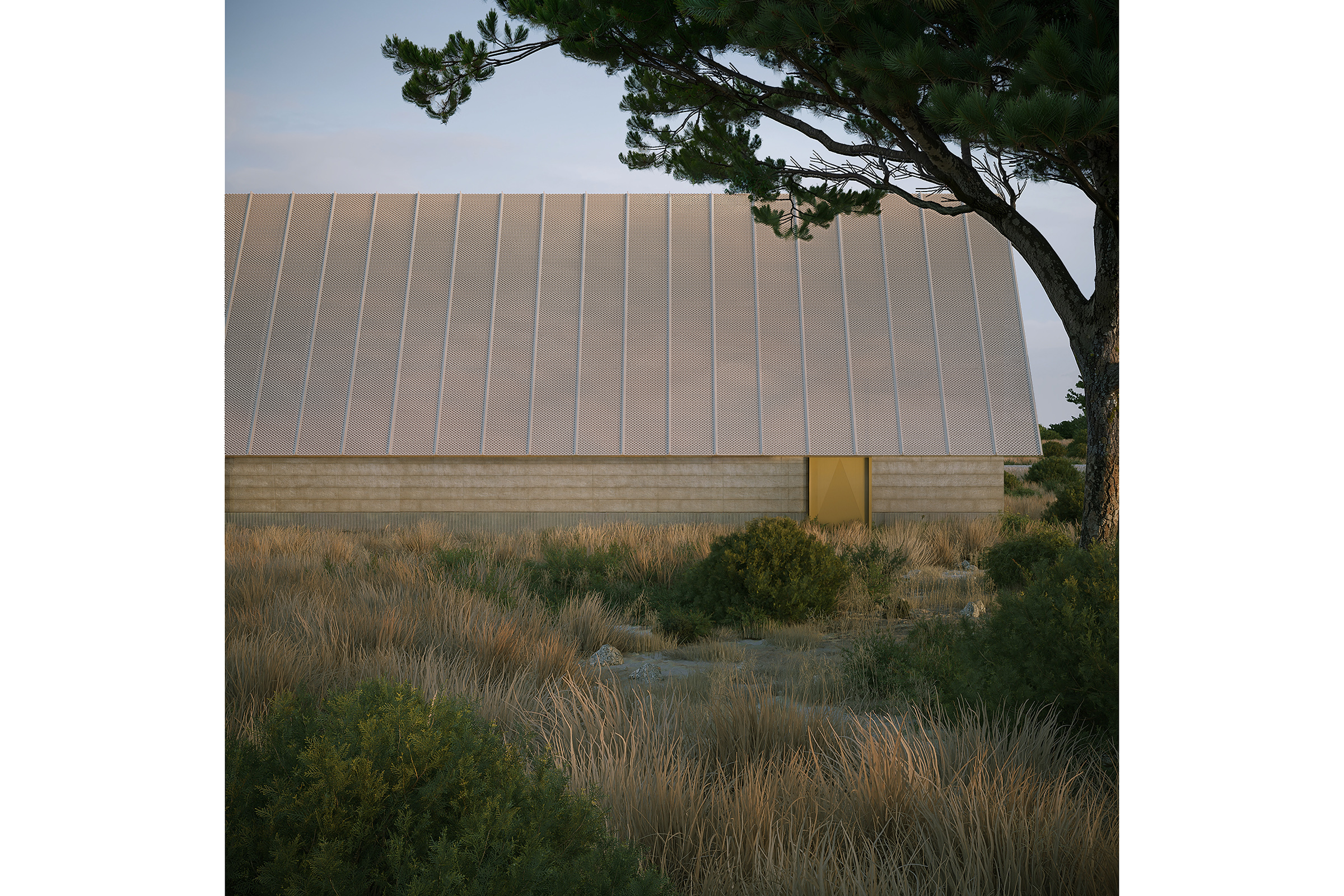
The landscape strategy is based on principles of low-impact design and is conceived as a network of gentle interventions, zones of varying intensity use, controlled management of vehicles, pedestrians, noise, dust, and light pollution. Within this network, a bird-watching observatory is integrated, taking advantage of the natural topography to create a modest and accessible for all viewing platform.
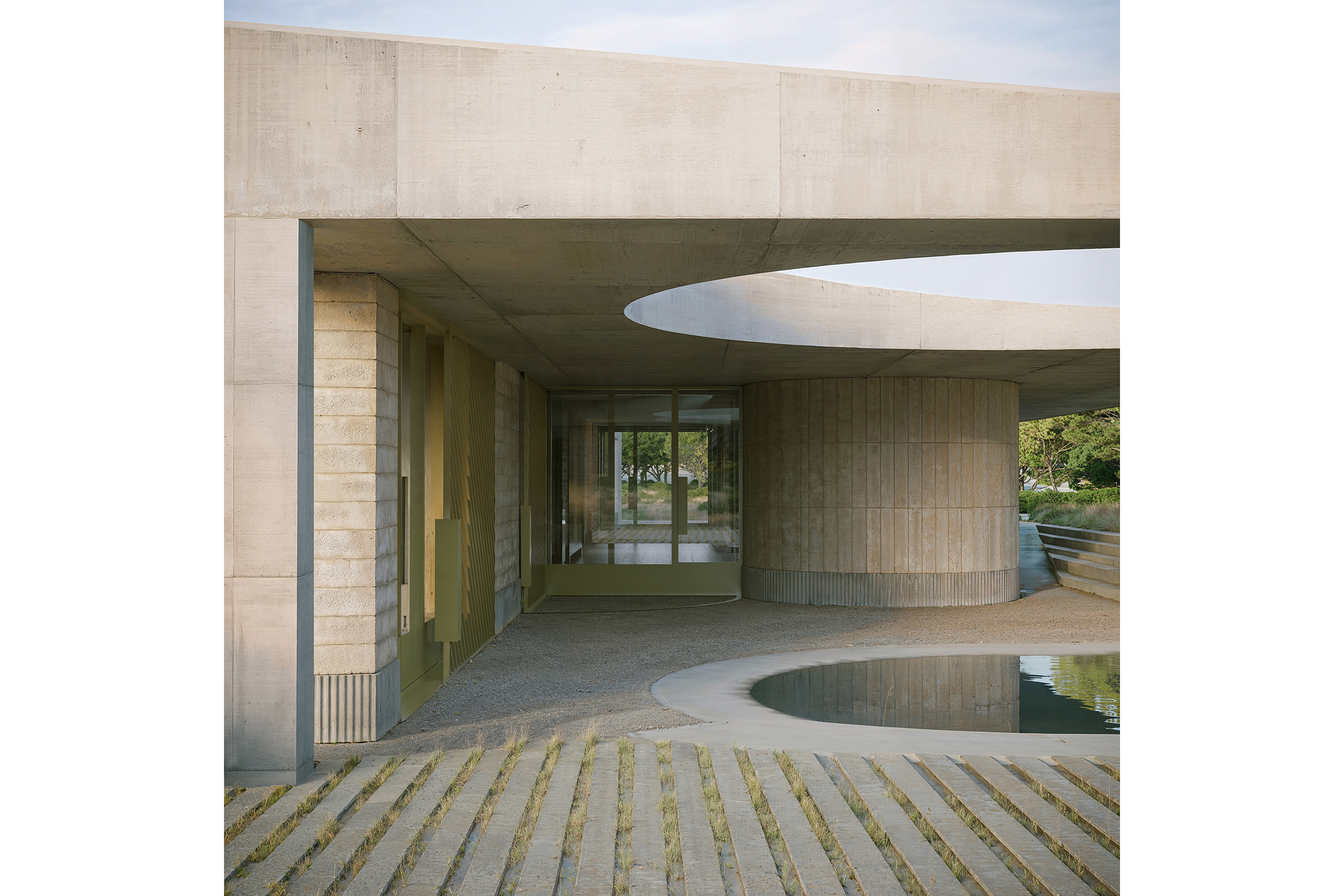
The covered outdoor area functions as a flexible space for education, rest, and gathering.
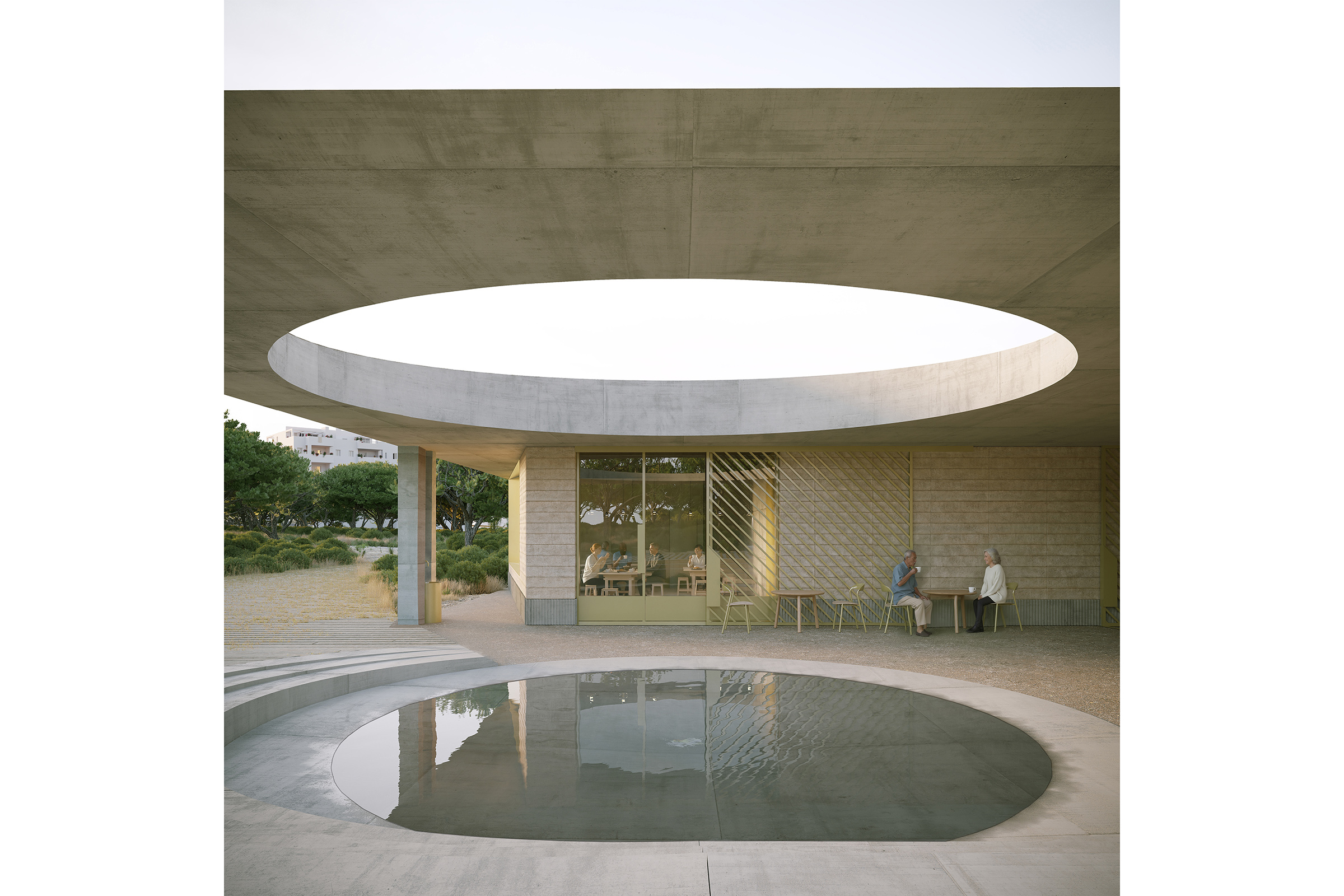
Beneath the canopy, a circular element collects rainwater. Acting as a cooling mechanism, it also expresses the seasonal transformation of the Salt Lakes landscape – filling up with water during the winter and forming salt pans during the summer.
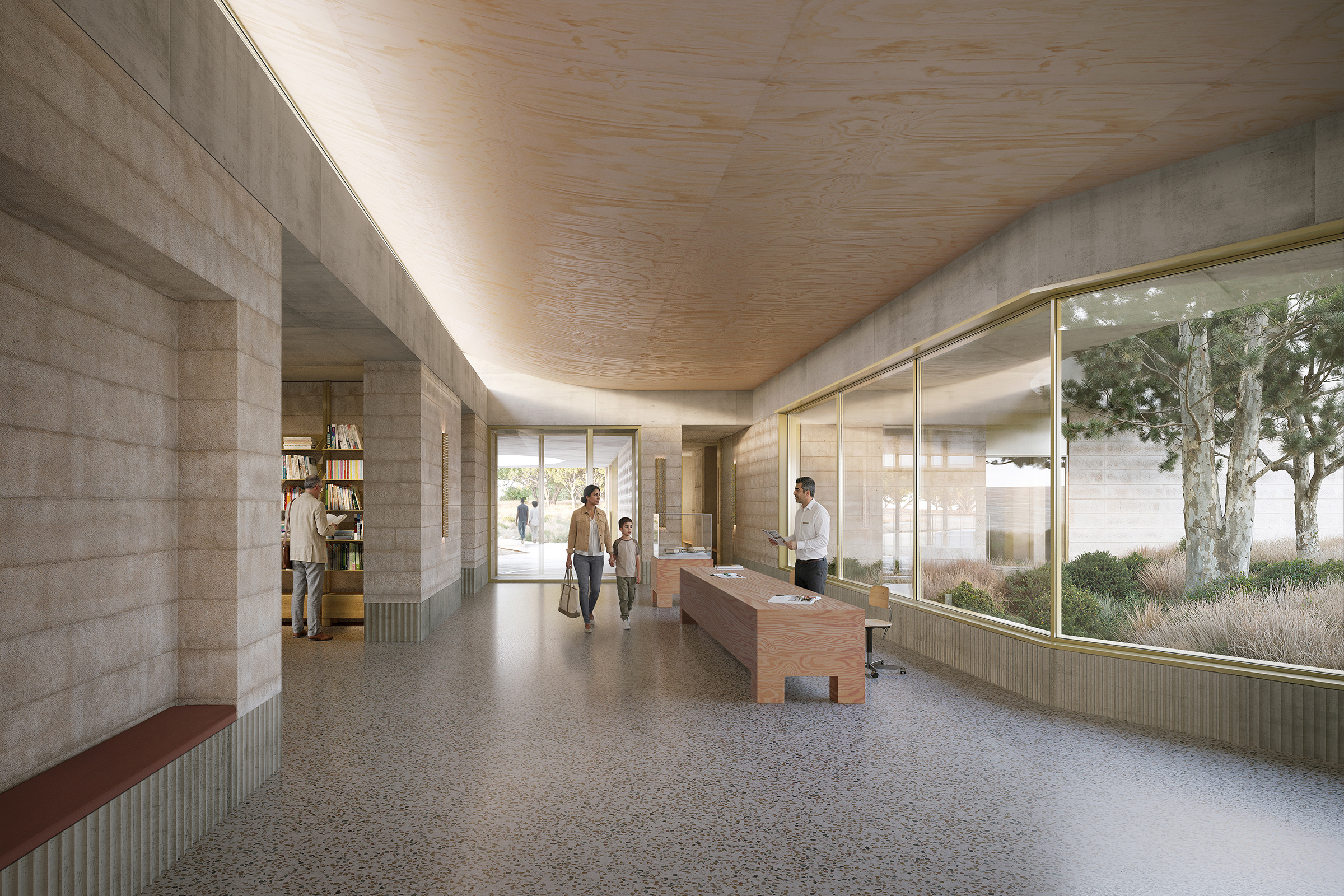
The entrance area functions as a welcoming arrival point for visitors. Its materials are durable, low-maintenance and aim to resonate the earthy tones of the surrounding landscape: walls made of compressed-earth building blocks, cast mosaic floor and timber-clad ceiling.
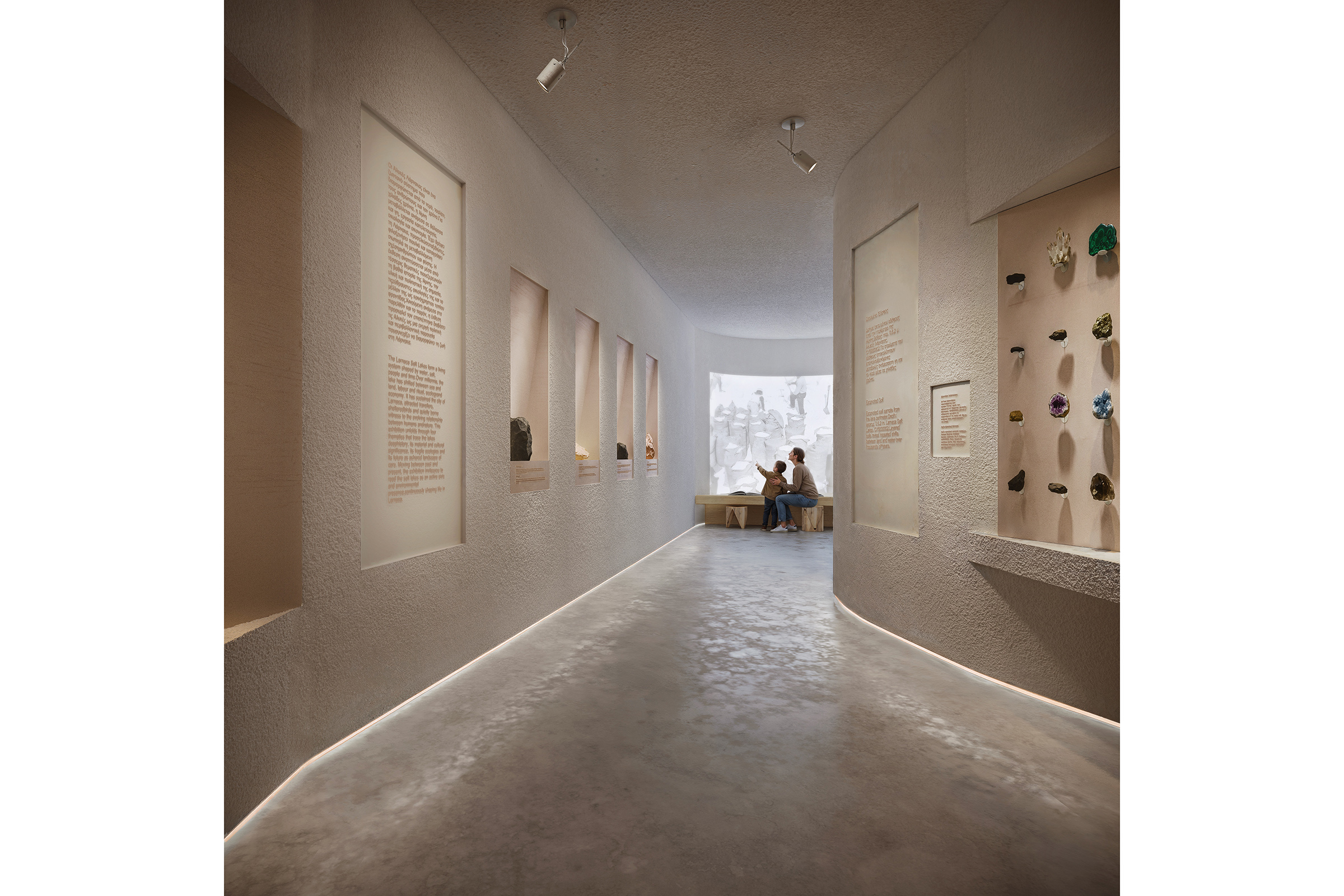
The exhibition space takes on a simple curvilinear form that follows the walk, connecting the reception area, the ticket office, and the shop. Granular textures aim to instil a feeling of being immersed in the various histories of the salt lake. A sacred place for the ancient world, a productive landscape over the past century and a protected wetland; the salt lake played an important role in the cultural and economic development of the city. The space also celebrates the famed Flamingos and other migrating species which visit the lakes every year, and further exhibits information on local flora and fauna.
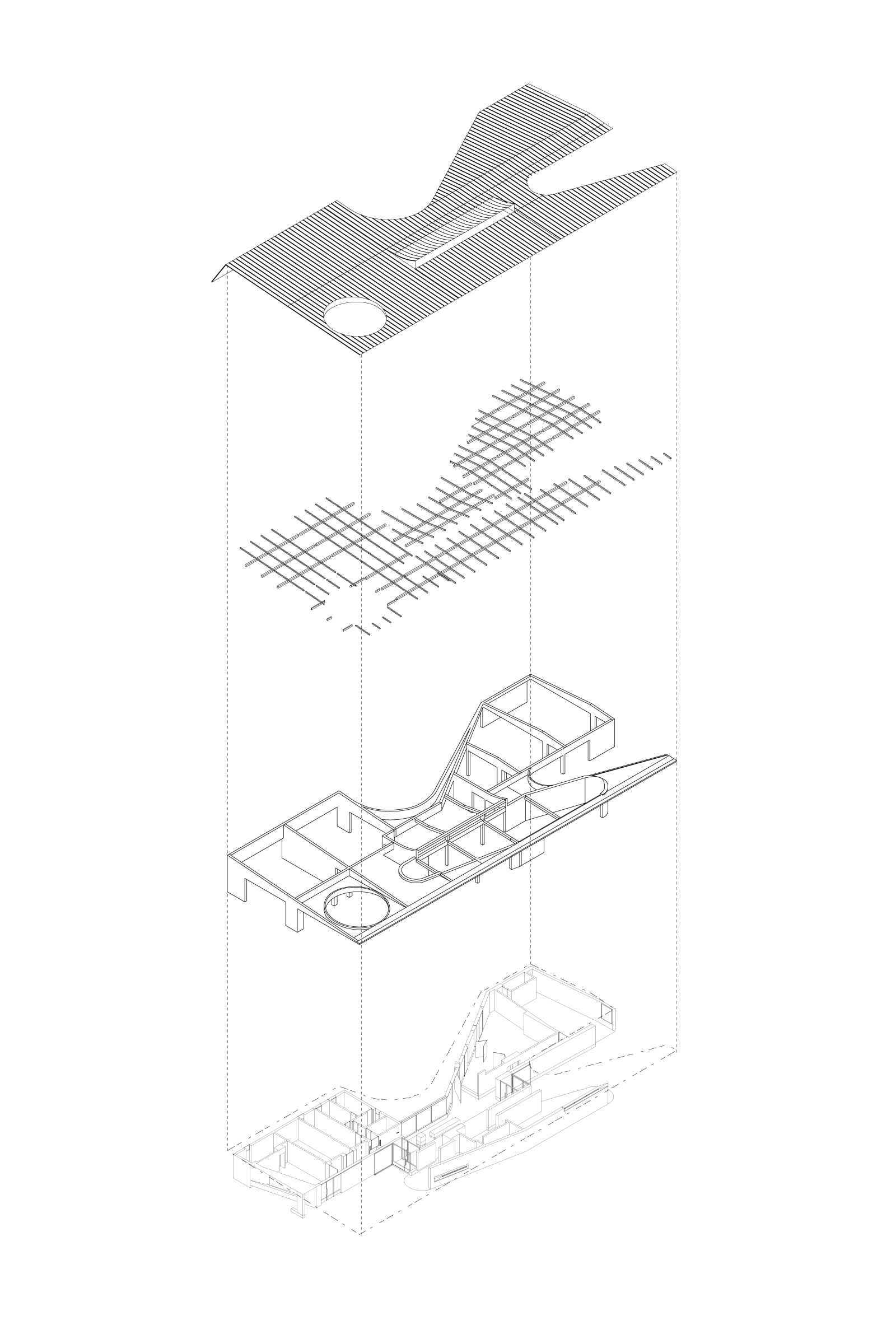
The building’s structure is a hybrid system of reinforced concrete and steel elements.
Low-carbon blocks made of compressed local earth soils, aggregate, hydraulic lime and fibrous binding agents make up the wall infill. This provides a cement based alternative as well as adding to the thermal performance of the building, following bioclimatic and sustainable design principles.
This system allows the construction of static slabs with reduced weight and overall carbon footprint. The weight reduction contributes to improved seismic performance, whilst allowing for larger openings and increased flexibility in plan.
Type: Architecture
Location: Larnaca, Cyprus
Size: 700m2
For: Larnaca Municipality
Status: Design Proposal
Featured in: Cyprus Architects Association’s Public Competition – Honourable Mention
Collaborators: ANASTASIOU MISSERI architects
With thanks to: Aarde Land – Amund Hugin & Enrique Cavelier, Platonas Stylianou & Associates, Harry Varnavas, Michalis Nikolaou, Spyros Nasainas
Visualisations: Slab Limited